OALL has launched O-DataMap, a research data platform that organizes experimental outputs into a navigable, map-like interface to help researchers discover, analyze, and build upon scientific data more efficiently. By integrating publicly available and researcher-submitted data, the platform emphasizes transparency, early knowledge sharing, and continuous validation of experiments. With AI-driven guidance, O-DataMap aims to help researchers design better experiments and move from simply finding information to mastering knowledge. OALL will officially introduce the platform during a global livestream on March 18, where it will also discuss the future of AI, technology safety, and new approaches to research communication.
LONDON, UK / ACCESS Newswire / March 10, 2026 / OALL, a technology company focused on safety and trust in the age of advanced artificial intelligence, said it has launched O-DataMap, a research data platform designed to organize experimental outputs into a continuously updated, navigable map.
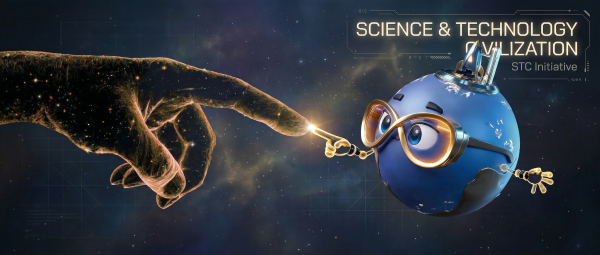
The company said it will hold its first global livestream event on March 18, hosted by "O," an artificial intelligence persona developed by OALL. The company describes O as symbolically "4.6 billion years old," referencing the age of Earth and human civilisation as a narrative framework for discussions about technology, safety and the future of society.
O-DataMap is described by the company as not a search engine; it is a 2D panoramic interface of all human technological activity that brings together publicly available and researcher-submitted experimental data. The platform is intended to allow scientific work to be discovered and reviewed earlier than through traditional academic publishing cycles. The global launch comes as researchers across disciplines face rising research costs, longer development timelines and increasing complexity in scientific information.
OALL said O-DataMap is designed to complement existing publication systems by emphasising experimental processes and data visibility. Rather than focusing primarily on journal placement, the platform organises research outputs based on data, research context and subsequent use, allowing researchers to trace how experiments evolve over time. Generally, O-DataMap can analyse the entire graph to show users what the best results look like in a specific domain. It provides a clear roadmap on how to study and reach those benchmarks, moving from "finding information" to "mastering knowledge".Before conducting experiments, researchers can search existing experimental data to reduce duplicated effort and refine experimental design.
According to the company, credibility on O-DataMap is built through transparency and ongoing engagement rather than journal branding alone. Experimental data can be examined, discussed and revisited by other researchers over time, creating a continuous validation process.
In the weeks leading up to the March 18 livestream, OALL noted that a number of technology content creators and industry KOLs had begun introducing O-DataMap through videos and social media posts. At the same time, more professors and researchers have been registering on the platform and exploring its features. Some scholars have described it as "Google Maps for scientific research," suggesting that its map-based structure could offer a more intuitive way to navigate complex research fields.
The March 18 livestream will publicly introduce O-DataMap and explore broader questions about how people live and work alongside artificial intelligence, technology-related safety considerations, and how new forms of research communication can complement existing academic publishing systems.
Rather than replacing traditional academic papers, O-DataMap aims to make research knowledge more accessible by organising and integrating experimental data from both publicly available sources and researcher submissions. This approach may reduce researchers’ reliance on navigating large numbers of isolated and often difficult-to-digest papers.
In this system, O-DataMap functions as an AI mentor. Before starting an experiment, users can interact with the AI to receive tailored guidance for their specific research questions. By already processing complex datasets and relationships between findings, the AI can deliver clear, actionable insights that help researchers design and refine their experiments more efficiently. OALL did not disclose commercial details and said its near-term priorities are platform stability, data quality and collaboration with the research community.
About OALL
OALL is a technology company focused on translating frontier science and technology into forms intended to be understandable, actionable and sustainable, with the stated goal of supporting human safety and trust in a technology-driven society. Its products include O-DataMap, a research data platform designed to support research discovery and collaboration alongside traditional academic publishing.
Media Contact
Organization: OALL
Contact Person Name: Claire
Website: https://o-datamap.oall.com/
Email: info@oall.com
Contact Number: +447498387712
City: London
Country: United Kingdom
SOURCE: OALL
View the original press release on ACCESS Newswire
COMTEX_475012417/2457/2026-03-10T14:55:17