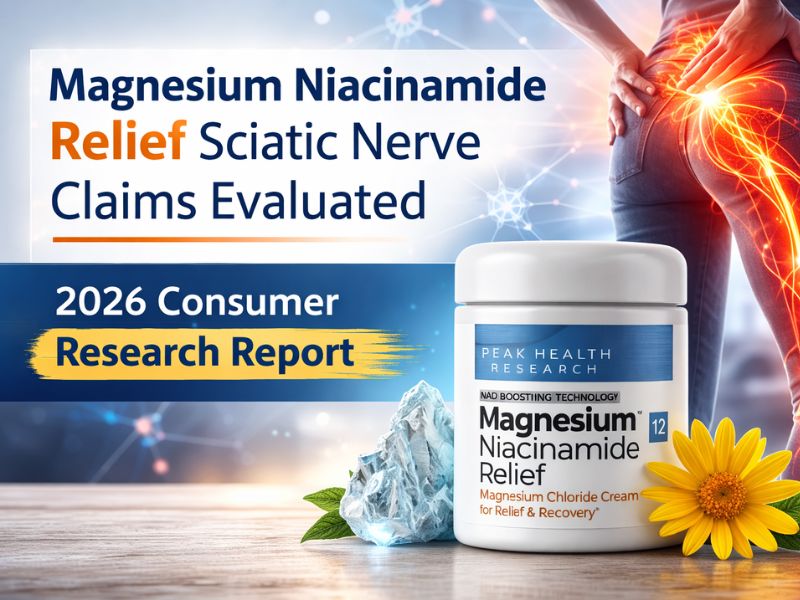
Spearfish, SD, March 06, 2026 (GLOBE NEWSWIRE) — This article is an informational consumer research report and does not constitute medical, health, or treatment advice. All product details described below are stated as presented by the company and should be verified directly on the official website before making any decision about the product. This article contains affiliate links. If a purchase is made through these links, a commission may be earned at no additional cost to the buyer. In this report, the term “effectiveness” refers strictly to how the company's marketing language describes potential outcomes. It does not indicate that the finished product has been clinically proven effective, and no published clinical trial appears to evaluate MagnesiumFreeze (Magnesium Niacinamide Relief) as a proprietary formula. Why Consumers Are Researching Topical Nerve Support Products in 2026 Interest in topical nerve support products has continued to expand as more adults explore non-pharmaceutical approaches to localized discomfort, cellular energy support, and magnesium-based topical formulas. For many people over 50, the overlap between persistent nerve sensitivity, declining cellular nutrient levels, and limited conventional options feels frustrating — and the search for topical alternatives that complement existing care keeps growing. Consumers researching sciatic nerve discomfort online have increasingly encountered topical nerve support formulas marketed around NAD+ metabolism, magnesium-based delivery systems, and transdermal nutrient support. Search queries such as “Magnesium Niacinamide Relief ingredients,” “MagnesiumFreeze cream information,” “topical NAD+ nerve pain,” “magnesium cream for sciatica,” and “sciatic nerve topical relief” have grown as more people explore options beyond conventional pain management. MagnesiumFreeze (Magnesium Niacinamide Relief) is one product appearing in these searches, particularly among individuals researching topical creams positioned around NAD+ metabolism and magnesium-based nerve support. The company's advertising references Nobel Prize-winning nerve research, NAD+ biology, and a topical delivery method it calls the “Transdermal Refuel” approach — a positioning that understandably generates questions about what the formula actually contains and whether those ingredients have credible research behind them. This 2026 consumer research report examines publicly available marketing statements associated with MagnesiumFreeze (Magnesium Niacinamide Relief), ingredient-level scientific literature, and company-published policy information to clarify what is supported by published research and what should be independently verified. This report does not evaluate MagnesiumFreeze as a medical treatment. Interest in topical nerve support products has expanded alongside broader consumer attention to cellular energy metabolism, inflammation research, magnesium deficiency, and localized topical comfort formulas. Products positioned around NAD+ biology and transdermal delivery now sit within a growing category of nerve support creams and topical wellness products discussed across consumer health searches. Current product details, pricing, and terms can be confirmed by viewing the current Magnesium Niacinamide Relief offer (official Peak Health Research page). Individual results vary. Topical products are not substitutes for professional medical evaluation, prescribed treatment, or physician-guided pain management. Consult a qualified healthcare provider before starting any new product for nerve-related discomfort. What Is Magnesium Niacinamide Relief Magnesium Niacinamide Relief is a topical cream marketed as a nerve support formula designed for people dealing with sciatic nerve discomfort. According to the company, Peak Health Research, the product delivers magnesium and niacinamide (a form of vitamin B3) through the skin as part of its topical nerve support positioning. The product falls within the broader category of topical nerve support creams, a segment that includes magnesium lotions, botanical anti-inflammatory creams, and transdermal nutrient delivery formulas marketed for localized discomfort. The product is distributed by Nutra Hero LLC, based in Spearfish, South Dakota. According to the company's terms and conditions, the corporate address is 41 W Highway 14, Ste 1763, Spearfish, SD 57783. The product label identifies it as a Magnesium Chloride Cream for Relief and Recovery. The company markets the product under the Peak Health Research brand and describes its team as including doctors, athletes, nutritionists, and functional health experts. According to the company's website, its stated mission centers on combining natural formulas with scientific research to support the body's natural healing processes. The promotional materials are presented as authored by “Dr. Andy Salazar,” described as a licensed pain specialist serving as Medical Director of Peak Health Research. This report has not independently verified those credentials. Scientific Research Background: NAD+ Metabolism and Nerve Cell Health Before getting into what the company claims, it helps to understand the science the marketing is built on — because there is real science here, even if the connection to this specific product requires careful examination. NAD+ (nicotinamide adenine dinucleotide) is a well-established coenzyme found in every living cell. It plays a central role in cellular energy production, DNA repair, and the activation of sirtuins — proteins associated with cellular longevity and repair mechanisms. This is not fringe science. This area of research has become increasingly relevant in discussions around aging, neuronal resilience, and cellular repair support. NAD+ biology is one of the most actively studied areas in aging and neuroscience research today. Published research confirms that NAD+ levels decline with age, and this decline is associated with changes in mitochondrial function, cellular repair capacity, and neuronal health. A comprehensive review published in the International Journal of Molecular Sciences documented that NAD+ metabolism has a direct influence on neuronal survival and that altered NAD+ pathways are implicated in several neurodegenerative conditions. Separately, a review published through the National Center for Biotechnology Information (PMC) examining nicotinamide's influence on central nervous system health found that the compound appears to play a role in protecting neurons from traumatic injury and ischemia. The review noted that nicotinamide's neuroprotective capacity has been linked to its ability to restore intracellular NAD+ and ATP levels and to inhibit overactivation of PARP — an enzyme that, when overactivated, depletes NAD+ and leads to cell death. Magnesium is an essential mineral involved in hundreds of biochemical processes. Published research has examined magnesium's role in nerve conduction, muscle relaxation, and inflammatory modulation. Magnesium deficiency — which becomes more common with aging — has been associated with heightened nerve sensitivity and muscle cramping in published literature. Here is where context matters most: the majority of NAD+ research has focused on oral supplementation using precursors like NMN (nicotinamide mononucleotide) and NR (nicotinamide riboside), not topical niacinamide application. And while niacinamide is a recognized NAD+ precursor, the extent to which topically applied niacinamide can meaningfully impact NAD+ levels in deep nerve tissue has not been established through published clinical evidence. The science behind NAD+ and nerve health is legitimate. Whether a topical cream can deliver these compounds at meaningful concentrations to sciatic nerve tissue is a separate question — and one that currently lacks published clinical data specific to this product. Ingredient Analysis: What the Formula Contains According to the company's published product information, Magnesium Niacinamide Relief contains three primary active ingredients. Here is what published research says about each one individually — keeping in mind that ingredient-level research does not necessarily reflect outcomes from the finished product formulation, which has not been independently evaluated in published clinical trials. Magnesium Niacinamide According to the company, this compound is included to support cellular NAD+ levels — described by the brand as the “energy molecule” nerve cells need for proper function and repair signaling. The company states that this ingredient helps replenish vital cellular components and addresses what it describes as underlying nerve cell nutrient depletion. Niacinamide (nicotinamide) is a well-documented NAD+ precursor in published research. Studies have confirmed its role in cellular energy production and neuronal protection. However, most published research has studied niacinamide through oral administration, not topical delivery to deep tissue. The specific concentration of magnesium niacinamide per application is not disclosed on available product materials. Arnica Arnica is a botanical compound with a long history of traditional use for pain and inflammation. A 2021 review published in Medicines (MDPI) examined clinical trials testing arnica for pain management across conditions including post-operative pain, arthritis, and musculoskeletal discomfort. The review concluded that arnica extract and topical preparations containing arnica showed promising effects for pain relief, attributed to anti-inflammatory, antioxidant, and immunomodulatory properties. A separate randomized, double-blind study found that topical arnica gel was not inferior to topical ibuprofen for osteoarthritis of the hands over a 21-day treatment period. Research results for arnica have been mixed overall — some studies show benefit while others show minimal effect — but the compound has a substantial research history for topical anti-inflammatory applications. Boswellia Boswellia is an herbal extract from the Boswellia serrata tree, researched for its potential role in modulating inflammatory pathways through compounds called boswellic acids. According to the brand, boswellia is included to protect nerves from long-term damage and help prevent scar tissue buildup. Published research has examined boswellic acids for anti-inflammatory properties, though most clinical studies have focused on oral supplementation for joint health rather than topical application for nerve-specific outcomes. These findings relate to ingredient research conducted under controlled study conditions rather than published clinical trials of the finished Magnesium Niacinamide Relief product. MagnesiumFreeze Marketing Claims vs. What Research Can Confirm The company's website positions MagnesiumFreeze with language that includes references to “Nobel Prize-winning research,” a “Transdermal Refuel” method, and claims of 15-minute relief timelines. These are the company's marketing claims as presented on the product page. Here is what that means in practical terms for someone doing their due diligence: The marketing materials reference ingredients studied in relation to NAD+ metabolism, nerve cell health, and inflammatory modulation. Some of those individual ingredients do have published research behind them — particularly niacinamide as an NAD+ precursor and arnica for topical anti-inflammatory applications. That research is real, and it is worth understanding. However, there is a distinction worth drawing carefully. Ingredient-level research conducted on isolated compounds at specific dosages is not the same as clinical evidence that this particular topical cream formulation produces the outcomes described in the marketing materials. No published clinical trial appears to evaluate MagnesiumFreeze (Magnesium Niacinamide Relief) as a finished proprietary formula using the standard of a randomized, placebo-controlled trial. That distinction applies broadly across the topical wellness product category — it is not unique to this product. But understanding it puts you in a stronger position to evaluate what you are actually buying. Company Claim: “Sciatic Nerve Decay” is the underlying cause of most sciatic pain According to the promotional materials, declining NAD+ levels cause nerve cells to “starve” and fire pain signals even when no structural damage is present. The marketing page states that 95% of sciatic nerve pain has nothing to do with bulging discs. Research context: The concept that NAD+ decline affects neuronal health is supported by published research. However, “Sciatic Nerve Decay” is not a standardized medical diagnosis recognized in peer-reviewed literature. Sciatica has multiple documented causes, including disc herniation, spinal stenosis, piriformis syndrome, and other structural factors. The claim that 95% of cases are unrelated to disc issues does not align with mainstream orthopedic and neurological literature. The underlying biological concept draws from real science, but the specific framework represents the company's positioning. Company Claim: The cream delivers relief in 15 minutes through a three-phase process The promotional page describes a “Refuel Phase,” an “Anti-Inflammation Phase,” and a “Stabilization Phase” occurring sequentially within 15 minutes of application. Research context: No published clinical trial has evaluated whether Magnesium Niacinamide Relief produces measurable physiological changes within a 15-minute application window. Topical magnesium absorption has been studied, with results varying considerably depending on the magnesium compound, concentration, and application area. Some consumers may experience subjective comfort from topical application, but the structured three-phase timeline represents the company's description of how the formula is designed to work — not a clinically validated outcome sequence. Company Claim: Over 90% of users report significant relief within the first week Research context: This figure appears in the company's marketing materials and represents self-reported data that has not been independently verified through published research. The company's promotional page also references a 0.4% refund rate, which the company presents as evidence of product satisfaction. Refund rate and satisfaction data from the company's own reporting are not equivalent to clinical trial outcomes. Company Claim: The formula is based on Nobel Prize-winning research Research context: Dr. Rita Levi-Montalcini received the Nobel Prize in 1986 for her discovery of nerve growth factor (NGF). Her research on nerve cell development and degeneration is foundational to neuroscience. However, her Nobel Prize-winning work did not involve topical magnesium niacinamide cream, NAD+ supplementation, or the management of sciatica. Referencing her research provides scientific credibility to the broader biological concepts but does not constitute an endorsement of or connection to this specific product. Pricing Disclosure According to the company's published checkout information at the time of this reporting, Magnesium Niacinamide Relief is offered in several package options: 6-Jar Package: According to the company, $29.99 per jar with shipping included The company's promotional materials also reference a standard price of $89 per jar. All purchases are described as one-time payments with no subscription or automatic rebilling. Pricing and availability may change. Consumers should verify current terms by viewing the current Magnesium Niacinamide Relief offer (official Peak Health Research page). Refund Policy Analysis According to the company's published return policy, consumers are covered by a 180-day money-back guarantee. Per the published terms, consumers who are unsatisfied within the first 180 days of receiving their order can request a full refund of the purchase price. There is a detail worth noting here. The company's promotional page describes the guarantee as “no forms to fill out” and “no questions asked” with refunds arriving within 48 hours. The formal terms and conditions describe a more structured process: consumers must first contact customer service at (888) 811-1186 to obtain a Return Merchandise Authorization (RMA) number, then return the product within 15 days of receiving that number. According to the terms, customers are responsible for return shipping costs, shipments returned without RMA numbers may not be eligible for a refund, and processing may take up to 15 business days after the returned product is received. Both descriptions come from the same company. Consumers should review the complete terms and conditions — not just the promotional page — when evaluating the refund policy. Holding on to purchase confirmation details is advisable. Consumer Verification Checklist If you are considering Magnesium Niacinamide Relief, here are the verification steps worth completing before ordering. Discuss nerve discomfort with a healthcare provider first. Sciatic nerve pain can stem from multiple causes, some of which require medical imaging and professional treatment. A topical product is not a substitute for professional diagnosis, and persistent or worsening nerve pain should be evaluated by a qualified clinician. Understand the difference between ingredient research and product trials. Magnesium, niacinamide, arnica, and boswellia each have published research histories. Those studies examined specific compounds at specific dosages under controlled conditions — not this finished product's formulation. That distinction matters when interpreting marketing claims. Review the refund terms carefully. The marketing page and the formal terms and conditions describe different refund experiences. Review the complete terms on the official website — including the RMA requirement, the 15-day return window after receiving your RMA number, and the processing timeline — before purchasing. Verify pricing directly on the official site. The company's promotional materials reference an $89 standard price alongside the tiered package pricing. Confirm current pricing at checkout before completing any purchase. Current terms are available by viewing the current Magnesium Niacinamide Relief offer (official Peak Health Research page). Evaluate marketing urgency claims independently. The promotional materials reference limited inventory counts and time-limited pricing windows. These are common direct-response marketing techniques. Make purchasing decisions based on your own research timeline rather than external urgency. Review the ingredient list for personal sensitivities. Consumers with sensitive skin or botanical allergies should review the complete ingredient list and discuss topical application with their healthcare provider, particularly if taking blood thinners or other medications that may interact with botanical compounds. Consumer Fit Considerations Situations Consumers May Wish to Consider: Preference for topical application over oral supplements: Some people prefer applying products directly to the area of discomfort rather than taking capsules. Topical delivery is this product's primary design feature. Interest in exploring natural ingredient options alongside professional care: The formula contains botanical ingredients with individual research backgrounds. People who want to explore natural ingredient options as one component of a broader wellness approach — not as a replacement for medical treatment — may find the ingredient profile worth evaluating with their healthcare provider. Interest in a product with a published return window: The 180-day guarantee, per the company's published terms, provides a return window for consumers who do not experience the results they expected. Review the specific return process requirements before ordering. Situations Where Additional Caution May Be Appropriate: Need for transparent ingredient concentrations: The product's individual ingredient dosages per application are not fully disclosed. Consumers who need specific concentration data to discuss with a healthcare provider or to compare against published research dosages may find this limiting. Severe or worsening nerve pain: Persistent or worsening sciatic nerve pain may indicate an underlying condition requiring diagnostic imaging, professional evaluation, and prescribed treatment. A topical product is not a substitute for medical care. Expectation that a single product can replace professional treatment: The company's marketing positions the cream as an alternative to medications, injections, and surgery. Consumers should approach these positioning claims with appropriate caution and make treatment decisions in consultation with qualified healthcare providers rather than based on marketing materials alone. Questions to Ask Yourself Before choosing any topical nerve support product, consider these questions: Have you discussed your sciatic nerve discomfort with a qualified healthcare provider? Are you currently taking medications that could interact with topical magnesium or botanical ingredients? Have you had diagnostic imaging to identify the cause of your discomfort? Are you comfortable with a product where individual ingredient concentrations are not fully disclosed? These considerations may help consumers evaluate what additional information they want to verify before purchasing. For those who have completed their due diligence, current product details are available by viewing the current Magnesium Niacinamide Relief offer (official Peak Health Research page). Frequently Asked Questions Is Magnesium Niacinamide Relief FDA approved? According to the company's own disclaimer, the statements on its website have not been evaluated by the Food and Drug Administration, and the product is not intended to diagnose, treat, cure, or prevent any disease. As a topical product, it does not require FDA approval before being sold. The company states that the product is manufactured in an FDA-registered, GMP-certified facility — which relates to manufacturing standards rather than product approval or endorsement. What is “Sciatic Nerve Decay”? As used in the company's marketing, “Sciatic Nerve Decay” describes a proposed condition in which nerve cells deteriorate due to declining NAD+ levels and nutrient deprivation. While age-related changes in NAD+ levels and nerve cell function are recognized areas of published research, the specific term is a marketing descriptor used by the company rather than a standardized medical diagnosis found in peer-reviewed literature. Does topical NAD+ supplementation work for nerve pain? NAD+ biology and its connection to neuronal health are well established in published research. However, most NAD+ supplementation studies have examined oral precursors such as NMN and NR, not topical niacinamide. The extent to which topically applied niacinamide reaches deep nerve tissue at meaningful concentrations has not been established through published clinical trials. Consumers searching for information on topical NAD+ nerve support should understand this distinction when evaluating marketing claims. Can Magnesium Niacinamide Relief replace prescribed treatment? According to the company's own terms of service, the information on its website should not be used in place of advice from a healthcare provider. The terms state that the website does not recommend self-management of health problems. Consumers should not change, adjust, or discontinue any prescribed medications or treatments without their physician's guidance. Where is Magnesium Niacinamide Relief sold? According to the company, the product is available exclusively through the official Peak Health Research website. The company's marketing page states that the product is no longer sold on Amazon and warns against purchasing from unauthorized sellers due to concerns about counterfeit products. What is the refund process? According to the company's published terms, consumers must contact customer service at (888) 811-1186 to obtain a Return Merchandise Authorization (RMA) number before returning the product. After receiving the RMA, consumers have 15 days to ship the product back. The company states that customers are responsible for return shipping costs. According to the published policy, refunds may take up to 15 business days after the returned product is received and processed. Is Magnesium Niacinamide Relief the same as MagnesiumFreeze? The product appears in consumer searches under both names, including “Magnesium Niacinamide Relief” and “MagnesiumFreeze.” Consumers should confirm the current product name, packaging, and official ordering page directly through the company's published materials before purchasing. Additional Consumer Research Consumers researching MagnesiumFreeze and Magnesium Niacinamide Relief may benefit from reviewing previously published independent reporting on this product. A 2026 consumer research overview examining Magnesium Niacinamide Relief topical cream and what consumers are researching before buying provides additional context on the product's positioning, ingredient background, and buyer considerations. Evaluating multiple independent sources is recommended before making any purchasing decision. Consumers may also wish to review published research on NAD+ metabolism, topical magnesium absorption, and botanical anti-inflammatory compounds through peer-reviewed databases such as PubMed. Contact Information For questions before or during the ordering process, according to the company's website, Peak Health Research offers customer support through the following channels: Phone: (888) 811-1186 Consumers who have completed their own research and want to review the full product details can do so. Complete product information, current pricing, and published terms are available by viewing the current Magnesium Niacinamide Relief offer (official Peak Health Research page). Disclaimers Content and Consumer Information Disclaimer: This article is an independent informational overview and does not constitute medical, health, or treatment advice. All product details, ingredient information, pricing, and policy terms described in this article are stated as presented by the company on its publicly available website and product labeling. This content has not been independently audited or verified unless specifically noted. Readers are encouraged to verify all claims directly with the manufacturer and to consult a qualified healthcare professional before beginning any topical product. FDA Health Disclaimer: These statements have not been evaluated by the Food and Drug Administration. This product is not intended to diagnose, treat, cure, or prevent any disease. Always consult your physician before starting any new supplement, especially if you have existing health conditions, take medications, or are pregnant or nursing. Professional Medical Disclaimer: This article is educational and does not constitute medical advice. Magnesium Niacinamide Relief is a topical cream, not a medication. If you are currently taking medications, have existing health conditions, are pregnant or nursing, or are considering any major changes to your health regimen, consult your physician before starting Magnesium Niacinamide Relief or any new product. Do not change, adjust, or discontinue any medications or prescribed treatments without your physician's guidance and approval. Results May Vary: Individual results will vary based on factors including age, baseline health condition, the nature and severity of nerve discomfort, skin absorption characteristics, consistency of use, genetic factors, current medications, and other individual variables. While some customers report improvements, results are not guaranteed. These are individual experiences and should not be interpreted as typical or guaranteed results. FTC Affiliate Disclosure: If a purchase is made through links in this article, a commission may be earned at no additional cost to the buyer. All descriptions are based on published research and publicly available information. Pricing Disclaimer: All pricing information referenced was based on the company's published website information at the time of publication (March 2026) and is subject to change without notice. Always verify current pricing and terms on the official Peak Health Research website before making any purchasing decision. Publisher Responsibility Disclaimer: The publisher of this article has made every effort to ensure accuracy at the time of publication. The publisher does not accept responsibility for errors, omissions, or outcomes resulting from the use of the information provided. Readers are encouraged to verify all details directly with Peak Health Research and their healthcare provider before making decisions.
3-Jar Package: According to the company, $39.99 per jar with shipping included
1-Jar Package: According to the company, $49.99 per jar plus $9 shipping and handling
Email: support@peakhealthresearch.com
Mailing Address: Peak Health Research, 41 W Highway 14 STE 1763, Spearfish, SD 57783

Phone: (888) 811-1186
Email: support@peakhealthresearch.com
