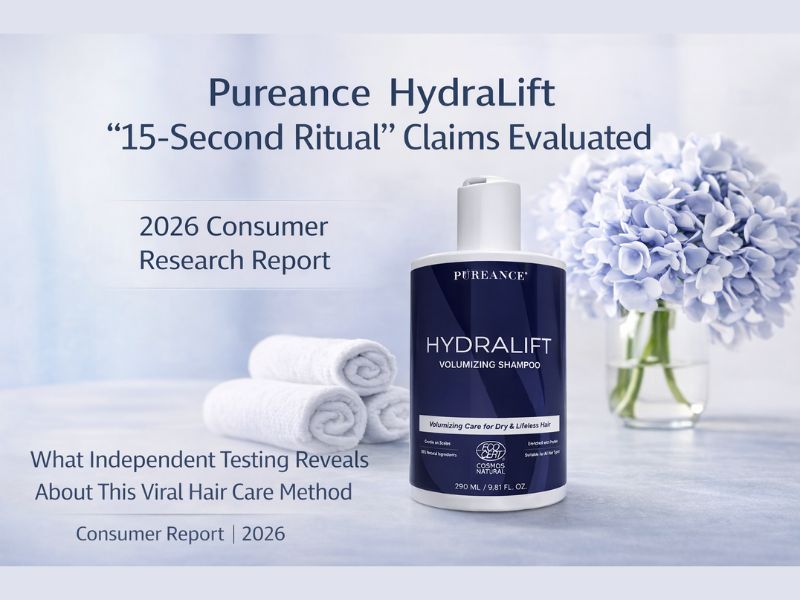
Manassas, VA, March 05, 2026 (GLOBE NEWSWIRE) — This 2026 consumer research report analyzes publicly available marketing statements and ingredient-level cosmetic science related to protein-based volumizing shampoos. This article contains affiliate links. If a purchase is made through these links, a commission may be earned at no additional cost to the buyer. This report does not constitute medical, health, or dermatological advice. All product details described below are stated as presented by the company and should be verified directly on the official website before any decision. Where this report references how the brand describes intended outcomes, it does not indicate that the finished product has been clinically proven through independent randomized controlled trials. No published clinical trial appears to evaluate Pureance HydraLift Volumizing Shampoo as a proprietary formula against a placebo control. Consumer interest in protein-based volumizing shampoos has increased significantly in recent years, particularly among adults researching solutions for age-related hair thinning. Many consumers are learning that hair is largely composed of keratin protein, and that age-related structural changes plus cumulative damage from chemical treatments and environmental exposure can affect texture, resilience, and perceived fullness over time. That growing awareness has pushed more people beyond conventional volumizing shampoos and toward formulas that claim to address structural weakness at the strand level. One product frequently referenced in these online discussions is Pureance HydraLift Volumizing Shampoo — marketed around what the company calls a “15-second ritual.” The phrase continues to generate strong consumer interest across social media, wellness platforms, and haircare discussion forums — particularly among women over 40 navigating visible changes in hair density, texture, and resilience. This report evaluates the marketing claims surrounding the product and analyzes publicly available research on hydrolyzed wheat protein used in cosmetic haircare formulations. It examines what the company states, what ingredient-level research supports under controlled conditions, and where gaps remain between marketing language and product-level clinical evidence — so you can make your own informed decision. Readers who wish to examine the product details described in this report can View the current Pureance HydraLift offer (official Pureance page). Individual results vary. Haircare products are not substitutes for medical evaluation of hair loss. Consult a qualified healthcare provider or dermatologist before starting any new haircare regimen, especially if you are experiencing sudden or significant hair loss. Why Protein-Based Haircare Is Trending in 2026 If you've noticed more conversations about protein shampoos, keratin treatments, and hair-strengthening formulas in your social media feeds lately, you're not imagining it. The protein haircare category has seen substantial growth heading into 2026, driven by several converging factors. First, there is growing public awareness that hair is approximately 85-90% keratin protein by composition, and that cumulative damage and age-related structural changes can affect hair texture, resilience, and perceived fullness. As consumers explore hair biology, many are moving beyond surface-level volumizing products — the ones that use silicones to coat strands and create temporary fullness — and looking for formulas that claim to address structural weakness at the strand level. Second, the clean beauty movement has pushed demand for plant-derived, certified organic alternatives to conventional haircare. Products carrying certifications like Ecocert COSMOS and USDA Organic are increasingly positioned as premium options for consumers who prefer formulas positioned as lower-synthetic or certified organic. Third, the demographic reality. Adults over 40 represent a large and growing consumer segment actively searching for solutions to hair changes they're experiencing in real time. Published research indicates that hair fiber diameter tends to decrease with age, and that cumulative damage from styling, coloring, and environmental exposure compounds over decades. It's within this market context that Pureance HydraLift Volumizing Shampoo has gained visibility — one of several protein-based haircare products positioning itself as a science-backed approach to age-related hair thinning. What Consumers Mean When They Search “15-Second Hair Ritual” in 2026 If you arrived at this report after searching for the “15-second hair ritual,” you're not alone. The phrase has become one of the most-searched terms in the protein haircare category, and understanding what's behind it helps put the marketing in context. Most people who search this phrase have encountered a video sales presentation — typically through a social media ad or a sponsored link — that introduces a simple daily routine claimed to address hair thinning. The presentation builds a narrative around protein depletion as the hidden driver of hair loss, positions conventional haircare products as ineffective, and then introduces a specific shampoo formula as the solution. The “15-second ritual” itself refers to the act of applying the shampoo during a normal wash. It's a marketing framework designed to emphasize how simple the routine is — not a clinically defined treatment protocol. The company's actual usage instructions recommend a one-to-two-minute application, which is standard for most shampoos. What consumers are really searching for when they type this phrase is whether the claims in the presentation are framed accurately, how the brand describes intended outcomes, and what ingredient-level cosmetic science can and cannot confirm about rinse-off protein formulas. That is exactly what this report examines. What Is Pureance HydraLift Volumizing Shampoo According to the company's published product information, Pureance HydraLift Volumizing Shampoo is a haircare product marketed as a protein-rich volumizing formula designed to strengthen, thicken, and revitalize thinning hair. The company describes it as a topical shampoo intended for use two to three times per week, positioning it as a natural alternative to conventional volumizing shampoos that rely on silicones, sulfates, or synthetic thickening agents. The product is distributed by Pureance, LLC, with customer support available at (800) 595-0735. According to the company's FAQ page, Pureance was founded in 2021 and underwent a rebranding in 2023 with a renewed focus on mature women navigating the complexities of menopause. The company states its products are made in Canada. The company's published materials describe HydraLift as carrying Ecocert COSMOS certification, with USDA Certified Organic positioning. The product page lists the shampoo as vegan, paraben-free, nut-free, and free from harsh sulfates. Per the company's website, the formula uses plant-derived cleansers rather than sodium lauryl sulfate or sodium laureth sulfate. The product is available in a 9.81 fl oz (290 ml) bottle. According to the official website, the shampoo is described as safe for sensitive scalps, all hair types, and both men and women. The “15-Second Ritual”: What the Company Claims vs. What Research Supports The central marketing narrative behind Pureance HydraLift connects the shampoo to what the company frames as a protein restoration approach to hair thinning. The sales presentation at hairvolumeformula.com builds a narrative around the concept that hair loss is primarily driven by protein depletion at the follicle and strand level — and that conventional topical products address only surface-level symptoms rather than this underlying structural weakness. The company's marketing frequently references a “15-second ritual,” a phrase used to describe the simplicity of the shampoo application. The product page states that hair protein content naturally decreases by approximately up to 1% per year after age 40 or because of various chemicals in straightening and coloring treatments. According to the company, this protein deficit creates structural weaknesses along the hair shaft, reducing diameter and compromising the cuticle's protective capacity. The core active ingredient cited in these claims is hydrolyzed wheat protein, which the company describes as a “hair-identical ingredient” that penetrates into damaged strands and creates a “molecular scaffold” that rebuilds weak spots from within. Published research on hydrolyzed proteins in haircare does exist, and it's worth understanding what it actually shows. A 2014 study in the Journal of Cosmetic Science examined hydrolyzed proteins of various molecular weights and found that smaller protein fragments could adhere to and potentially penetrate damaged hair fibers. Research published in the International Journal of Trichology has noted that protein-based treatments can temporarily improve the tensile strength of chemically damaged hair by filling gaps in the cuticle layer. These findings relate to ingredient behavior under study conditions and do not establish clinical performance for any specific finished shampoo. These are real findings on real compounds — but there are important distinctions worth understanding before connecting that research to any specific product. The studies above examined protein treatments applied under specific laboratory conditions, often at known concentrations, with controlled exposure times significantly longer than a typical shampoo application. A shampoo that remains on hair for one to two minutes during a wash operates differently than a leave-on protein treatment applied in a clinical or salon setting. The degree of protein penetration and structural benefit achievable during a brief wash cycle versus an extended treatment protocol is meaningfully different. The company's own usage instructions recommend applying the shampoo to wet hair, massaging into the scalp, and leaving it on for one to two minutes before rinsing — which is standard for a shampoo but different from the extended protein treatment protocols examined in published research. Consumers researching terms such as “Pureance HydraLift protein therapy,” “does hydrolyzed wheat protein work for hair,” “HydraLift volumizing shampoo,” or “15-second hair ritual” should understand that marketing claims referencing protein science describe ingredient-level and category-level research, not product-specific clinical outcomes verified through independent testing of this finished shampoo formula. This analysis does not conclude whether Pureance HydraLift has or lacks utility as a volumizing shampoo. It focuses on clarifying how the performance-related marketing language should be interpreted when you're doing your own research. Protein Restoration for Hair: What the Concept Means and How Pureance Uses It If you've been researching protein haircare, you've likely encountered the term “protein restoration” across multiple brands — not just Pureance. It's become a popular framework in the haircare category, so it's worth understanding what the science actually supports. Keratin is the primary structural protein in human hair, comprising approximately 85-90% of the hair fiber. Published research indicates that chemical treatments, heat styling, UV exposure, and aging can degrade keratin structure, leading to increased porosity, reduced tensile strength, and visible thinning. That part of the narrative is well-supported. Where it gets more nuanced is the distinction between protein supplementation of the hair shaft — which can temporarily improve texture, strength, and appearance — and actual hair regrowth or follicle reactivation, which involves biological processes at the scalp level that a topical shampoo is not designed to replicate. The sales presentation references concepts like “sleeping hair follicles” and “waking up dormant follicles” — language that implies the product may stimulate new hair growth. Published dermatological research distinguishes between miniaturized follicles (which may respond to medical treatments like minoxidil or finasteride) and follicles that have undergone permanent scarring or loss. A protein-based shampoo works on existing hair strands, not on follicle biology. Understanding this distinction helps you evaluate any protein-based haircare product more accurately — whether it's Pureance HydraLift or any competitor in the same category. Pureance HydraLift Ingredient Profile: What the Label Discloses Unlike dietary supplements that often use proprietary blends, Pureance HydraLift publishes its full ingredient list on the product page. This transparency is a notable strength — it allows you and your healthcare provider to evaluate each component individually. According to the official product page, the key ingredients include: Hydrolyzed Wheat Protein: The company's featured active ingredient, described as penetrating into damaged strands and creating a strengthening scaffold. Published research on hydrolyzed wheat protein in cosmetic applications has shown it can temporarily improve hair manageability, reduce breakage during combing, and add perceived volume through strand-level protein deposition. Betaine: Derived from sugar beets, this ingredient functions as a natural humectant that draws moisture from the environment. Per the product page, it helps reduce static and improve manageability while protecting the hair's natural moisture barrier. Coco-Glucoside: A plant-derived cleanser from coconut oil and fruit sugars. The product page describes it as providing effective cleansing while maintaining natural oils and pH balance — an alternative to sulfate-based cleansers. Glycerin: A plant-origin humectant that attracts and retains moisture. Published cosmetic science research supports glycerin as one of the most effective and well-studied moisturizing agents in haircare formulations. Additional ingredients listed on the product page include Cocamidopropyl Betaine (coconut-derived conditioning cleanser), Sodium Coco-Sulfate (gentler coconut-derived surfactant), Glyceryl Oleate (plant-based emollient), Xylitylglucoside (sugar-based hydrating compound), Brassicyl Isoleucinate Esylate (plant-derived amino acid complex), and several natural preservatives including Sodium Benzoate, Potassium Sorbate, and Benzyl Alcohol. The formula also contains Citrus Aurantium Peel Oil for fragrance, along with naturally occurring Limonene and Linalool from essential oils. Consumers with citrus sensitivities should note these components. A meaningful strength of this product's labeling is that the full ingredient list is disclosed. What the label does not disclose, however, is the concentration of hydrolyzed wheat protein per application. Without this figure, comparing the amount of active protein delivered during a typical wash against the concentrations used in published hair protein research remains difficult. Readers who wish to examine the full ingredient list and product specifications can View the current Pureance HydraLift offer (official Pureance page). How Shampoo Delivery Affects Research Comparison Here's something worth thinking about if you're comparing any shampoo's claims to published research — and this applies across the entire haircare category, not just to Pureance. Shampoos are rinse-off products. Even with the recommended one-to-two-minute application time, the majority of active ingredients are washed away during rinsing. Published cosmetic chemistry research suggests that rinse-off products generally deliver less active ingredient to the hair and scalp compared to leave-on treatments, serums, or masks applied at equivalent concentrations. That doesn't mean shampoo-based protein treatments have zero effect. Research published in the Journal of the Society of Cosmetic Chemists has demonstrated that some protein deposition does occur even during brief wash cycles, particularly on damaged hair that has increased porosity and greater protein-binding sites. But the degree of benefit is typically more modest compared to extended-contact protein treatments. If you're evaluating Pureance HydraLift — or any protein-based volumizing shampoo — understanding the rinse-off delivery format helps set realistic expectations for what each wash can deliver. How Cosmetic Hair Volumizing Products Differ From Medical Hair Loss Treatments This is one of the most important distinctions in the entire hair thinning space, and it's worth understanding clearly before you spend money on any product. Cosmetic volumizing products — including protein shampoos like Pureance HydraLift — work on existing hair strands. Published cosmetic science literature suggests that some volumizing products may temporarily improve the appearance of hair fullness through film-forming ingredients and protein deposition on damaged fibers, depending on hair type and damage level. They are designed for aesthetic improvement. Medical hair loss treatments — like minoxidil (FDA-approved for over-the-counter use) and finasteride (prescription) — work at the follicle level. Published clinical trials demonstrate that these treatments can stimulate actual hair regrowth in some patients by affecting biological processes in the scalp. These are fundamentally different approaches addressing different aspects of hair health. They serve different purposes and, according to dermatological guidance, can potentially be used alongside each other — though you should consult your dermatologist before combining any haircare products with medical treatments. Published research distinguishes between several types of hair thinning. Androgenetic alopecia (pattern hair loss) is hormone-driven and typically responds best to medical treatments. Telogen effluvium (stress-related shedding) is often temporary and may resolve on its own. Age-related hair diameter reduction involves gradual thinning of individual strands — and this is the category where protein-based cosmetic treatments may offer the most benefit by temporarily increasing strand diameter through protein deposition. A dermatologist or trichologist familiar with your personal health history is the most reliable resource for determining what type of hair thinning you're experiencing and whether a cosmetic protein shampoo is an appropriate component of your haircare strategy. Common Use-Cases Consumers Cite When Researching Volumizing Shampoos According to the company's positioning and common consumer search intent, the following are typical scenarios where shoppers explore products in this category. Some consumers may prefer clean-ingredient, certified organic haircare: The Ecocert COSMOS certification and USDA Organic positioning may appeal to consumers who prioritize avoiding parabens, silicones, and harsh sulfates. According to the company, the formula uses plant-derived cleansers and sustainably sourced ingredients. Some consumers experience age-related changes in hair texture and volume: Adults noticing gradual thinning, reduced bounce, or increased brittleness may find protein-based shampoos a reasonable addition to their haircare routine — particularly as a cosmetic approach to temporarily improving strand thickness and manageability. Some consumers want a gentle daily-use shampoo for sensitive scalps: Per the company's product page, the sulfate-free, plant-derived surfactant system is designed for those with scalp sensitivity who have experienced irritation from conventional volumizing shampoos. Some consumers are looking for a long-term haircare approach rather than a quick fix: The company's marketing emphasizes consistent use over time, framing the product as supporting gradual improvement rather than overnight transformation. Other approaches may be more appropriate for people who: Are experiencing significant or sudden hair loss: Sudden or patchy hair loss may indicate a medical condition requiring professional evaluation. A cosmetic shampoo is not a diagnostic or treatment tool for clinical hair loss conditions. Require clinically proven hair regrowth solutions: FDA-approved treatments like minoxidil have stronger published evidence for stimulating actual hair regrowth than any cosmetic shampoo. Consumers seeking regrowth rather than cosmetic volumizing should consult a dermatologist. Need transparent concentration data for active ingredients: While the full ingredient list is disclosed, the specific concentration of hydrolyzed wheat protein per application is not published. Consumers who need this information for clinical comparison should contact the manufacturer directly. Consumer Verification Questions Have you consulted a dermatologist to determine the cause of your hair thinning? Is your priority cosmetic volume improvement or actual hair regrowth? Are you comfortable with a product that supports gradual improvement through consistent use rather than delivering rapid visible changes? Does your current shampoo contain harsh sulfates or silicones that may be contributing to dryness and breakage? Are you within the comfort zone of a 365-day return window to evaluate whether a product aligns with your specific hair type? Your answers help determine whether a protein-based volumizing shampoo — or a different approach entirely — best fits your specific situation. Publicly Listed Pricing Structure (Verify on Official Page) According to pricing information published on the official website at the time of this report, Pureance HydraLift Volumizing Shampoo is available in the following options: Subscribe & Save: According to the company, $62.10 per bottle (reduced from a listed retail price of $69), billed monthly with free delivery in the US. The company states subscribers can pause or cancel at any time. One-Time Options: According to the company, pricing varies by package selection — 6-bottle, 3-bottle, and 1-bottle options are listed. The product page shows a one-time option listed at $65 per bottle for a single bottle, reduced from a listed retail price of $69. According to the company's published terms, the subscription involves a recurring monthly charge that continues until the subscriber cancels. The company states there is no purchase minimum or commitment, and cancellation is available through the customer account, by email at support@pureance.com, or by phone at (800) 595-0735. Promotional offers may be displayed periodically on the official website and may change or expire. Readers should verify current terms directly on the official Pureance page before making any decision. Readers who wish to examine the current pricing and product details referenced in this report can View the current Pureance HydraLift offer (official Pureance page). Pureance Refund Policy and 365-Day Return Window According to the company's published terms, purchases may be covered by a 365-day refund policy, subject to eligibility requirements and the procedures listed on its website. The company's return policy states that return postage is the responsibility of the customer, and the company recommends using delivery confirmation. According to the terms, returns must be received within one year from the billing date, and all charges excluding shipping and handling fees are described as fully refundable. The company states refunds are processed within 72 hours of receiving the returned package, with bank processing taking up to five additional business days. According to the company's terms, used or empty product containers may only be returned if adequate time has elapsed to consume the product as directed on the label. Readers should verify all refund terms directly on the official website before making any decision. What Evidence Would Be Needed to Substantiate a Finished-Product Claim This is one of the most useful questions you can ask about any haircare product — and it applies across the entire category, not just to Pureance HydraLift. What would it actually take to prove that a shampoo does what its marketing says? For a cosmetic haircare product to substantiate performance claims through clinical evidence, the standard generally includes a randomized, controlled trial using the finished product as formulated. The study would need to disclose the exact formulation, specify the duration of use, define measurable endpoints such as changes in hair diameter, tensile strength, or visual density assessments, and enroll a study population representative of the target consumer. Pureance's website references a small focus group study conducted with 14 female participants aged 45-55 who used Pureance skincare products (Cellular Hydration and Cellular Restore serum) for 1.5 months. According to the company, this study pertains to the company's skincare line, not to HydraLift Volumizing Shampoo specifically. The website includes the caveat that outcomes are not typical and may vary. As of this writing, no published clinical trial appears to have evaluated Pureance HydraLift Volumizing Shampoo as a finished proprietary formula through an independent randomized controlled trial. The research supporting the product's claims pertains to ingredient-level studies on hydrolyzed proteins and individual botanical compounds, conducted under different conditions than a typical consumer shampoo application. Understanding this distinction helps you evaluate the actual evidence landscape rather than relying on how marketing materials frame it. That is not about dismissing the product — it is about knowing exactly what has and has not been demonstrated. Consumer Verification Checklist Understand the difference between protein deposition and hair regrowth. Protein-based shampoos can temporarily improve hair texture, strength, and volume by depositing protein on existing strands. They are not designed to stimulate new hair growth from dormant follicles. If you are experiencing actual hair loss, a dermatologist evaluation should come first. Recognize rinse-off product limitations. Shampoos deliver less active ingredient than leave-on treatments due to brief contact time. Set expectations accordingly and consider whether a complementary leave-on protein treatment might support your haircare routine. Examine subscription terms carefully. According to the company's published terms, the Subscribe & Save option involves recurring monthly charges. The company states cancellation is available at any time, but examine the specific process and timelines on the official website before committing. Confirm refund terms independently. Examine refund policy requirements, return shipping responsibilities, and processing timelines directly on the official website before making any decision. Talk to your dermatologist. This is especially important if you are experiencing sudden hair loss, patchy thinning, or hair changes associated with medication or medical conditions. Professional guidance should come before any haircare product decision. Frequently Asked Questions About Pureance HydraLift What is the “15-second ritual” and how does it relate to Pureance HydraLift? The “15-second ritual” is a consumer-facing marketing phrase used in the product's sales presentation at hairvolumeformula.com. It describes the simplicity of the shampoo application. The company's actual usage instructions recommend applying the shampoo to wet hair, massaging into the scalp, and leaving it on for one to two minutes before rinsing. The phrase itself is a marketing descriptor rather than a clinically defined protocol. Is Pureance HydraLift FDA approved? Pureance HydraLift is a cosmetic haircare product. Under current federal regulations, cosmetic products do not require FDA approval before being sold. The FDA does not evaluate cosmetic product efficacy claims. According to the company, the product carries Ecocert COSMOS certification and is described as USDA Certified Organic, which relates to ingredient sourcing and manufacturing standards rather than FDA product approval. Does Pureance HydraLift contain wheat allergens? The primary active ingredient is hydrolyzed wheat protein. While hydrolysis breaks down proteins into smaller fragments that are generally considered less allergenic, individuals with wheat allergies or celiac disease should consult their healthcare provider before using any product containing wheat-derived ingredients. According to the company, the product is listed as gluten-free and nut-free. Can Pureance HydraLift regrow hair? According to the company's product page, the product is positioned as a volumizing and strengthening shampoo that works on existing hair strands through protein deposition. Published dermatological research distinguishes between cosmetic hair volumizing and actual hair regrowth, which involves follicle-level biological processes. FDA-approved treatments like minoxidil have stronger published evidence for stimulating regrowth. The company's published materials focus on strengthening, volume, and appearance-related claims rather than making explicit regrowth claims. How long does it take to notice changes with Pureance HydraLift? According to the company's product page, hair is described as becoming stronger with each use, and the FAQ section recommends consistent long-term use for optimal outcomes. Published research on protein-based haircare suggests that cosmetic changes in texture, manageability, and perceived volume can occur relatively quickly with protein-depositing shampoos, while cumulative strengthening benefits develop over weeks of consistent use. Individual timelines depend on factors including baseline hair condition, damage level, and usage frequency. Is Pureance HydraLift suitable for men? The company's product page describes the shampoo as suitable for both men and women and all hair types. The marketing primarily targets women over 40, but the ingredients and mechanism are not gender-specific. Men experiencing hair thinning should consult a healthcare provider to determine the cause before selecting any haircare product. Where is Pureance HydraLift manufactured? Per the company's FAQ page, Pureance products are made in Canada. The company states that all products meet its manufacturing standards and are crafted with sustainably sourced ingredients. Additional Consumer Research Consumers researching Pureance HydraLift may benefit from examining previously published independent reporting on this product. A 2026 report examining Pureance HydraLift's science-based protein restoration approach provides additional context on the company's positioning within the certified organic haircare category. Independent research across multiple consumer publications and peer-reviewed sources may provide broader perspective on protein-based haircare, hydrolyzed wheat protein research, and volumizing shampoo formulations. Evaluating multiple sources is recommended before making any decision. Consumers may also wish to examine the FDA's general guidance on cosmetic product labeling and claims. This report is structured as a consumer research analysis of publicly available marketing statements and ingredient science context, and it is not a product review, endorsement, or recommendation. Summary of Key Findings Pureance HydraLift Volumizing Shampoo is a cosmetic haircare product that positions itself around the concept of protein restoration for age-related hair thinning. The product contains hydrolyzed wheat protein as its featured active ingredient, which has published research at the ingredient level suggesting temporary changes in hair strand strength, manageability, and perceived volume under study conditions. However, the product's specific concentration of this active ingredient is not disclosed, and no published clinical trial has evaluated the finished shampoo formula as formulated. According to the company, the product carries Ecocert COSMOS certification, is described as USDA Certified Organic, and is backed by a 365-day refund policy with both subscription and one-time options available. The company's own website includes disclosures noting that individual experiences may vary. The “15-second ritual” marketing framing and references to protein science should be understood as ingredient-level and category-level research context rather than product-specific clinical validation. The distinction between cosmetic volumizing and medical hair regrowth is important for setting realistic expectations about what any protein-based shampoo can deliver. Consumers interested in examining the product information referenced in this report can View the current Pureance HydraLift offer (official Pureance page). Contact Information For questions regarding the product details described in this report, according to the company's website, Pureance offers customer support: Company: Pureance, LLC Phone: (800) 595-0735, Mon – Sun 24/7 International: +1-703-740-4444 Email: support@pureance.com Products manufactured in: Canada (according to the company's FAQ) Company Address: 10199 Dean Drive, Manassas, VA 20110 (per published terms) Disclaimers Content and Consumer Information Disclaimer: This article is an independent informational research report and does not constitute medical, health, dermatological, or cosmetic advice. All product details, ingredient information, pricing, and policy terms described in this article are stated as presented by the company on its publicly available website and product labeling. This content has not been independently audited or verified unless specifically noted. Readers are encouraged to verify all claims directly with the manufacturer and to consult a qualified healthcare professional or dermatologist before beginning any new haircare product. Cosmetic Product Notice: Pureance HydraLift Volumizing Shampoo is a cosmetic haircare product and is not intended to diagnose, treat, cure, or prevent any disease or medical condition. The descriptions of potential benefits in this article and on the company's product page reflect the brand's marketing claims and published ingredient research. They do not represent guaranteed outcomes for any individual consumer. Hair thinning concerns that may be related to medical conditions should be evaluated by a qualified healthcare provider. Individual Experiences, Pricing, and Product Variability: Individual experiences will vary based on factors including age, baseline hair condition, damage history, consistency of use, genetic factors, current medications, environmental exposure, and other individual variables. While some customers describe positive experiences, outcomes are not assured. All pricing, promotional offers, subscription terms, and refund policies referenced in this article are based on information published on the official product website at the time of writing (March 2026) and may change without notice. Always verify current pricing and terms on the official Pureance website before making any decision. FTC Affiliate Disclosure and Publisher Responsibility: This article contains affiliate links. If a product is purchased through these links, a commission may be earned at no additional cost to the buyer. This compensation does not influence the accuracy, neutrality, or integrity of the information presented. All descriptions are based on published research and publicly available information from the company's official website. The publisher of this article has made every effort to ensure accuracy at the time of publication. The publisher does not accept responsibility for errors, omissions, or outcomes resulting from the use of the information provided. Readers are encouraged to verify all details directly with Pureance and their healthcare provider before making decisions. Ingredient Research vs. Product Claims: Throughout this article, ingredient-level research is cited to provide scientific context. This is ingredient-level research; Pureance HydraLift Volumizing Shampoo as a finished product has not been clinically studied through published independent randomized controlled trials. Individual ingredient findings do not mean this specific product will produce equivalent outcomes. These distinctions are maintained throughout the article to support informed consumer decision-making.

Phone: (800) 595-0735, Mon - Sun 24/7
International: +1-703-740-4444
Email: support@pureance.com